

The most recent hate against Haitian Americans feels depressingly familiar: rumors and lies, amplified online and by prominent leaders, invoke racist tropes and incite violence. Already, bomb threats in Springfield, Ohio, have forced schools and city buildings to close. An entire community fears that its most vulnerable members—immigrants and children—will fall victim.
As researchers who study the effects of anti-Asian hate, we’ve seen this all before. The challenge remains the same: how to support community members facing hate and discrimination.
When anti-AAPI hate incidents, fueled by xenophobic rhetoric, surged during the COVID-19 pandemic, the sudden urge to aid Asian Americans and Pacific Islanders—too often dismissed as monolithic or as model minorities—was a welcome change. Community-based organizations provided legal services, case management, mental health services, and community gatherings to the elderly, recent immigrants, and those with limited English, living in enclaves such as Chinatown.
But Asian Americans and Pacific Islanders still need more support.
A Troubling Paradox Between Older and Younger Immigrants
Anti-Asian hate didn’t start with the pandemic, and it certainly didn’t end there. A new report by Stop AAPI Hate and the National Opinion Research Center at the University of Chicago found that last year, 49 percent of Asian Americans and Pacific Islanders were victims of a hate act in the United States.
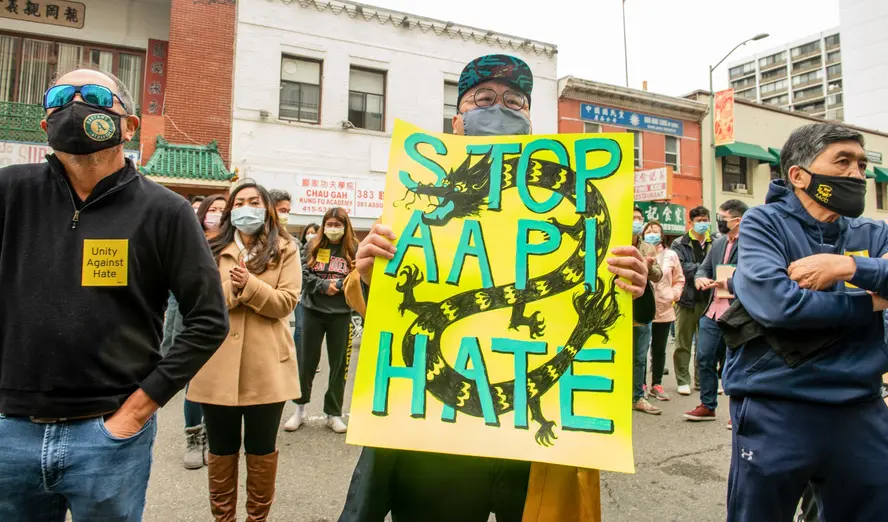
- A protester holding a placard against Asian hate in the community in Oakland, California, May 14, 2021 Photo by Pat Mazzera/SOPA Images/Sipa USA via Reuters


